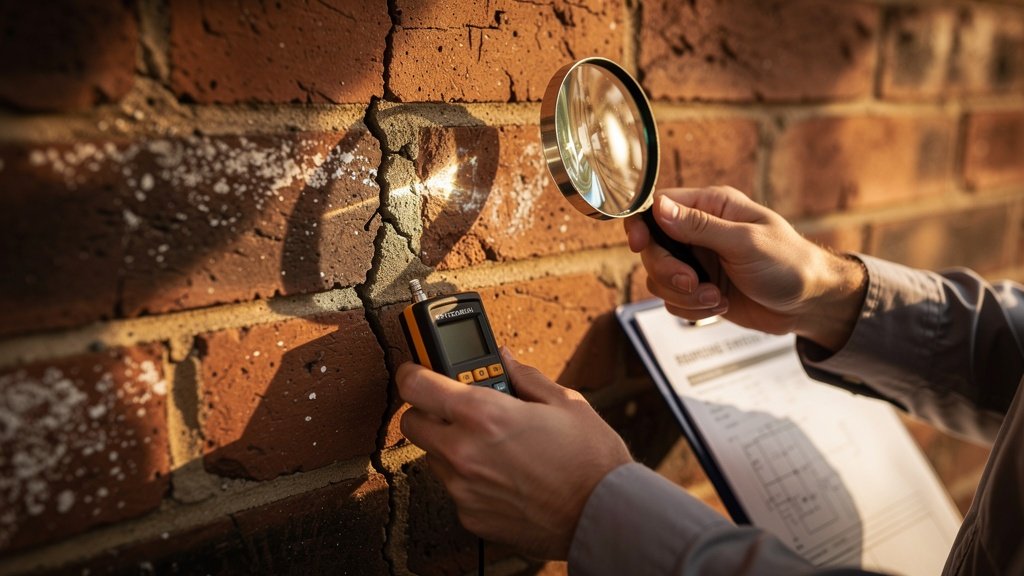
Here's a question most property owners have never properly considered: if your property burned to the ground tonight, would your buildings insurance actually cover the full cost of rebuilding it?
For a significant number of UK property owners, the answer is no. Research consistently shows that somewhere between 50% and 80% of UK properties are under-insured — many by more than 40%. That's a potentially catastrophic financial exposure.
A Reinstatement Cost Assessment (RCA) — carried out by a RICS-accredited surveyor — is the definitive way to find out whether your insurance cover is adequate. And the cost of one is a tiny fraction of what under-insurance could cost you.
What Is a Reinstatement Cost Assessment?
A Reinstatement Cost Assessment (also known as a rebuild cost assessment or building reinstatement valuation) is a professional calculation of the total cost of demolishing your existing property and rebuilding it from scratch to the same specification — including all associated costs.
This is not the same as the property's market value. In fact, the relationship between market value and reinstatement cost is complex and non-linear:
- For a modest flat in a purpose-built block in Chiswick, the reinstatement cost may be significantly higher than the market value — because construction costs are high relative to the value of the unit
- For a large Victorian house in Bedford Park, the reinstatement cost may be lower than the market value — because the land value is a significant component of market value and land doesn't need to be "rebuilt"
- For commercial properties, the relationship varies enormously by property type and specification
What Does a Reinstatement Cost Include?
A properly conducted RCA includes all the costs you'd actually face if you needed to rebuild, including:
- Demolition and site clearance: Often overlooked, demolition of a Victorian house in London can cost £20,000–£50,000 before any rebuilding begins
- Foundations: New foundations to current Building Regulations standards
- Superstructure: Walls, roof, floors — rebuilding to match the original specification
- Internal finishes: Plasterwork, flooring, joinery and fittings
- Services: Electrical, plumbing, heating and drainage to current standards
- Professional fees: Architect, structural engineer, planning consultant and project manager
- Planning and Building Regulation costs
- VAT on all relevant elements
- Allowance for inflation during the rebuild period
Why Are So Many Properties Under-Insured?
There are several common reasons:
- Original insurance based on purchase price or market value: Many policies are set up when a property is purchased, using the purchase price or the mortgage lender's valuation as the sum insured. Neither of these figures is a reinstatement cost.
- Inflation in construction costs: UK construction costs have risen dramatically in recent years — by over 30% since 2020 according to BCIS data. Many policies aren't reviewed regularly enough to keep pace.
- Significant improvements not notified to insurer: If you've added an extension, converted the loft or significantly refurbished the property, the reinstatement cost will be higher — but your insurer may not know.
- Using online calculators: The rebuilding cost calculators provided by insurers or online tools are often very inaccurate, particularly for older, non-standard or unusual properties.
What Happens If You're Under-Insured and Need to Claim?
This is where it gets serious. Most buildings insurance policies contain an "average clause". If your property is under-insured, the insurer can reduce any claim payment in proportion to the degree of under-insurance.
Example: Your property has a true reinstatement cost of £600,000 but you're insured for £400,000 (two-thirds of the correct amount). You suffer fire damage that costs £100,000 to repair. Under the average clause, your insurer would pay only two-thirds of that — £67,000 — leaving you £33,000 out of pocket, even though you've been paying premiums for years.
In a total loss scenario, the gap is even more stark.
How Often Should I Have an RCA Done?
The RICS recommends a full RCA every three years, or whenever you carry out significant works to the property. Between full assessments, most insurers will index-link the sum insured in line with published construction cost indices — but this isn't always accurate, particularly in periods of high inflation.
If you can't remember the last time your buildings insurance sum insured was professionally assessed, the answer is: it's time to get one done.
Contact Chiswick Surveyors to arrange a reinstatement cost assessment, or read more about our RCA services.
Related Guides

James Hartley
Director and founding surveyor. Carries out reinstatement cost assessments for residential and commercial properties across West London.