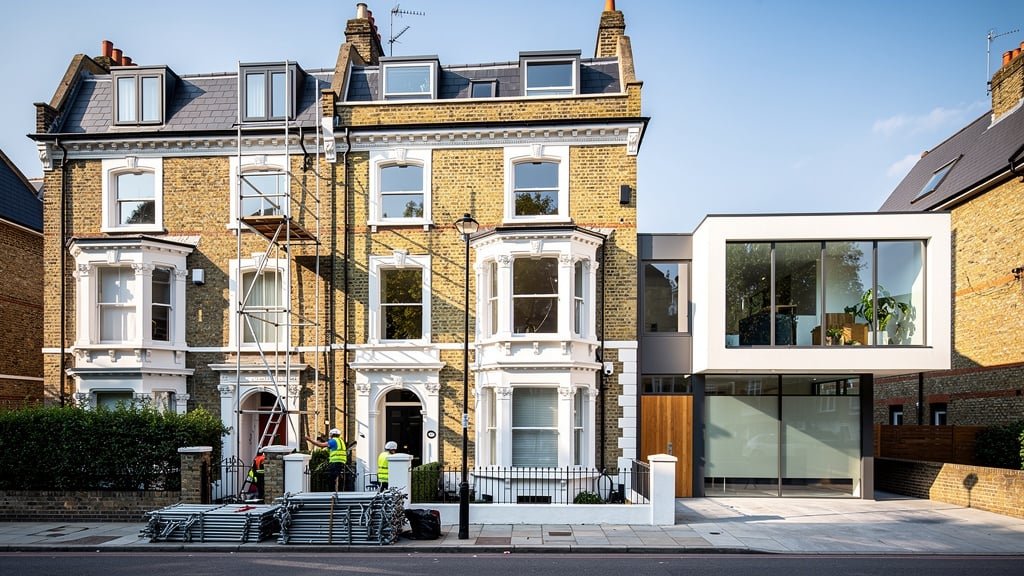
Party wall matters catch an enormous number of homeowners completely off guard. I've seen loft conversions delayed by months, neighbourly relationships destroyed and — in the worst cases — court proceedings initiated, all because someone didn't understand their obligations under the Party Wall etc. Act 1996.
My name is Tom Bradley, and party wall work is one of my specialisms at Chiswick Surveyors. In this guide, I'm going to explain exactly what the Party Wall Act requires, when it applies, what happens if you ignore it, and how to navigate the process as smoothly as possible.
What Is the Party Wall Act?
The Party Wall etc. Act 1996 is a piece of UK legislation that provides a framework for preventing and resolving disputes in relation to party walls, boundary walls, and excavations near neighbouring buildings. It applies in England and Wales.
Before you carry out certain types of building work, the Act requires you to notify your neighbours — formally. You're not asking for their permission; you're giving them notice. But they do have rights under the Act, including the right to appoint their own surveyor and to delay your works while matters are resolved.
When Does the Party Wall Act Apply?
The Act applies to three main categories of work:
- Work on an existing party wall or structure: This includes loft conversions where you cut into the party wall, underpinning a shared wall, removing or inserting steel beams into party walls, raising the height of a party wall, or cutting into a party structure to insert a damp-proof course.
- New building on or at the boundary line: If you want to build a new wall astride or up against the boundary between your property and your neighbour's.
- Excavation near a neighbouring building: If you're digging within 3 metres of a neighbouring building to a depth greater than the neighbours' foundations, or within 6 metres under a 45-degree line drawn from the base of the neighbour's foundation.
In Chiswick and the surrounding West London streets, the most common triggers are loft conversions, rear extensions and basement excavations. With the terraced and semi-detached housing stock that dominates W4, almost every significant building project will engage the Act.
What Happens After You Serve Notice?
Once you've served a valid party wall notice (and it must be served correctly — with the right content, in the right way, to the right people), your neighbour has 14 days to respond.
They have three options:
- Consent: They agree to the works. You can proceed, but you should still record the current condition of their property with a schedule of condition.
- Dissent and agree to a single agreed surveyor: They don't want to consent but agree to use one surveyor — usually yours — to produce the party wall award. This is the most efficient approach.
- Dissent and appoint their own surveyor: They appoint their own surveyor, who then works with your surveyor to produce the award. You typically pay both surveyors' fees.
If your neighbour doesn't respond within 14 days, they're deemed to have dissented — and you must then appoint a surveyor to resolve the matter.
What Is a Party Wall Award?
A party wall award (sometimes called a "determination") is a legal document drawn up by the appointed surveyor or surveyors. It sets out:
- The rights and obligations of both parties
- The manner in which the works are to be carried out
- Hours of working and the handling of noise and vibration
- A schedule of condition of the neighbour's property (with photos) before works start
- How any damage caused by the works will be dealt with
The award is legally binding on both parties. It protects both the building owner carrying out the works and the adjoining owner whose property might be affected.
What If You Don't Serve Notice?
This is where things get serious. If you carry out notifiable works without serving the correct party wall notices, you're technically acting unlawfully. Your neighbour can seek an injunction to stop the works, which can result in significant delays and legal costs. If your works cause damage to their property, you're exposed to claims without the protection that a properly executed award would have provided.
I handled a case in Hammersmith two years ago where a homeowner had started a basement excavation without serving any party wall notice. The neighbour obtained an injunction after cracks appeared in their property. The works were stopped for eight weeks while surveys were carried out, legal proceedings were managed and an award was retrospectively agreed. The cost in delays, legal fees and surveying work was well over £30,000 — far more than getting the process right from the start would have cost.
"The Party Wall Act is not optional. It's a legal requirement that exists to protect everyone involved. Getting it right from day one protects your project, your pocket and your relationship with your neighbours."
How Much Does a Party Wall Surveyor Cost?
As the building owner, you typically pay all surveying fees associated with the party wall process — including the adjoining owner's surveyor if they appoint one. Fees vary depending on complexity, but for a straightforward loft conversion in a Chiswick terrace, you might typically expect to pay:
- Building owner's surveyor: £600–£900
- Adjoining owner's surveyor (if appointed): £600–£900
- Schedule of condition: included or around £200–£300 extra
These are ballpark figures — contact us for an accurate quote for your specific project.
Practical Tips for a Smooth Party Wall Process
- Start early. The minimum notice period for most party wall matters is two months before works start (one month for line-of-junction notices). Factor this into your project timeline.
- Talk to your neighbours first. Before you serve formal notice, have a conversation. Neighbours who feel they've been consulted are far less likely to appoint their own surveyor or make the process difficult.
- Serve notice correctly. A notice that doesn't meet the requirements of the Act is invalid and the clock doesn't start running. Using a party wall surveyor to serve notice for you removes this risk.
- Always do a schedule of condition. Even when your neighbour consents, a photographic schedule of condition protects you if any dispute arises later about whether damage was pre-existing or caused by your works.
Related Guides

Tom Bradley
Building surveyor and party wall specialist at Chiswick Surveyors. Tom has managed hundreds of party wall cases across London, from loft conversions and extensions to complex basement excavations. He grew up in Kew and has deep knowledge of West London's Victorian and Edwardian housing stock.