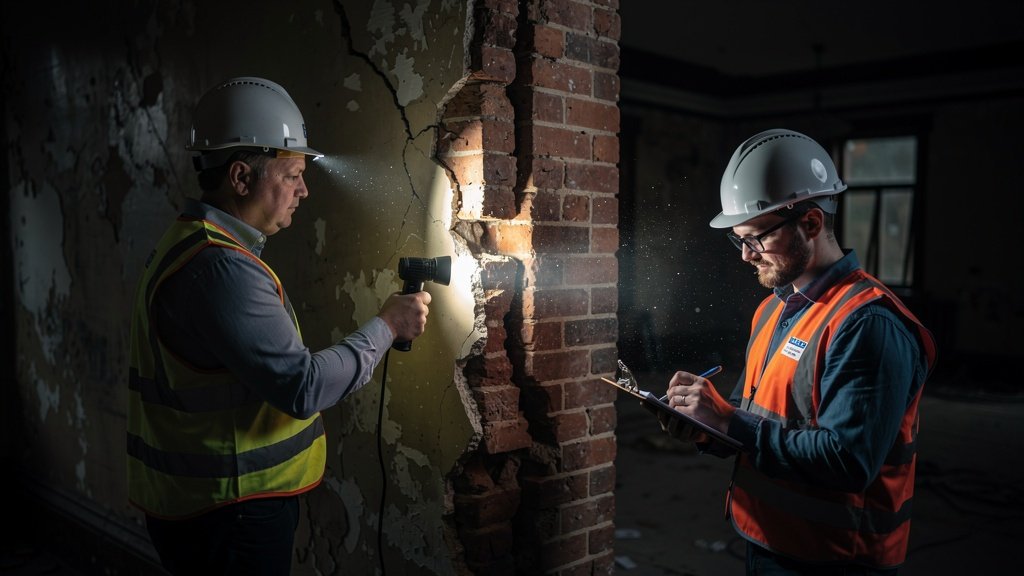
If you're buying a property in Chiswick, structural issues are one of the most important — and most commonly misunderstood — aspects of any building survey. Chiswick Surveyors carry out hundreds of building surveys each year across W4, W6 and the surrounding West London postcodes, and structural defects are something we encounter on a weekly basis.
In this guide, I want to explain exactly what structural issues we look for, why they matter, what causes them, and — crucially — what you should do if your surveyor flags one. Understanding the difference between a minor cosmetic crack and genuine structural movement can save you tens of thousands of pounds and years of stress.
Why Chiswick Properties Are Particularly Susceptible to Structural Issues
The vast majority of Chiswick's housing stock dates from the late Victorian and Edwardian periods — roughly 1880 to 1914. These are beautiful buildings: solid brick construction, high ceilings, ornate plasterwork, generously proportioned rooms. But they are also, by definition, between 110 and 145 years old.
Over that period, these buildings have been through multiple owners, significant alterations, and decades of deferred maintenance. They were built using lime mortar — a flexible, breathable material — and solid-wall construction. They sit on London clay, one of the most problematic soil types in the world for building movement. Many have had extensions added, loft conversions installed, and modern damp-proof courses retrofitted — often without professional oversight.
The result is that structural issues in Chiswick's Victorian and Edwardian housing stock are not unusual. They are the norm. In my experience, a Level 3 Building Survey on a pre-1914 Chiswick terrace will almost always identify at least one issue worth noting and, in a significant proportion of cases, something that requires specialist investigation or action.
The Eight Most Common Structural Issues We Find in Chiswick Properties
1. Subsidence and Foundation Movement
Subsidence is the most feared structural issue among property buyers — and with good reason. It occurs when the ground beneath a building's foundations moves or compresses, causing the structure above to sink. In Chiswick and across West London, the primary cause is London clay.
London clay is notorious for its behaviour. It shrinks significantly when it dries out — particularly during hot, dry summers or when large trees extract moisture from the soil nearby — and it swells again when moisture returns. This seasonal movement is called heave and shrinkage, and it places enormous cyclical stresses on foundations.
The characteristic signs of subsidence include:
- Diagonal cracks running from the corners of windows and door openings (typically wider at the top than the bottom)
- Doors and windows that have become difficult to open or that no longer close properly
- Visible stepping or cracking in the external brickwork, particularly at corners
- Cracks that have opened and closed seasonally over time
Not every crack indicates subsidence — and this is where professional assessment is essential. Many Victorian properties show cracking that is purely cosmetic, caused by normal thermal expansion and contraction, settlement that occurred decades ago and has now stabilised, or simply poor-quality patch repairs. Distinguishing genuine active subsidence from historic movement requires experience and, often, specialist investigation including crack monitoring and trial pits.
2. Wall Tie Failure
From approximately the 1930s onwards, cavity wall construction became the standard in UK housebuilding. In cavity walls, two parallel 'skins' of brick are connected by metal wall ties embedded in the mortar joints at regular intervals. These ties keep the two skins of brickwork working together as a structural unit.
The problem is that the original mild steel wall ties used in construction are now, in many properties, severely corroded. As the metal corrodes, it expands — lifting and cracking the mortar joint, and eventually losing the structural connection between the two skins of brick altogether.
The signs of wall tie failure include:
- Horizontal cracking in the external mortar joints at regular intervals (typically every 450mm — the standard tie spacing)
- Outward bulging of the outer leaf of brickwork
- Visible rust staining from the mortar joints
Wall tie failure is particularly common in properties built between 1930 and 1980. The remedy — replacing the failed ties with specialist stainless steel remedial ties — is a well-established process but can be costly, particularly on larger properties.
3. Roof Structure Problems
Roof structure defects are among the most common findings in our Level 3 surveys across Chiswick. Victorian terraces were typically built with traditional cut-timber roof structures — rafters, ridge boards, purlins and wallplates — and many have been in place, without significant attention, for over a century.
Common issues include:
- Roof spread: Where inadequate horizontal restraint allows the rafters to push outward at the eaves, forcing the top of the external walls outward. This manifests as diagonal cracking in the upper courses of the external walls, often running from the corners of the highest windows.
- Rafter decay and beetle infestation: Particularly in loft spaces with poor ventilation. We regularly find evidence of wood-boring beetle activity in the structural timbers of older Chiswick roofs.
- Failed or inadequate collar ties: Where the horizontal timbers that brace the rafters against spread have been removed (often to create more usable loft space) without alternative restraint being provided.
- Sagging ridge boards: Where the central ridge has deflected, causing a visible sag in the roofline that is often visible from the street.
4. Lintel Failure
Every window and door opening in a brick-built property requires a horizontal beam — a lintel — to span the gap and carry the weight of the brickwork above. In Victorian and Edwardian properties, lintels were typically made from steel sections, and many have been in place, unprotected, for over a hundred years.
Steel lintels corrode when moisture penetrates the outer brickwork. As the steel corrodes, it expands, creating horizontal cracking in the brickwork immediately above the window or door opening. In advanced cases, the corroded lintel can lose structural integrity entirely, allowing the brickwork above the opening to drop.
We encounter corroding lintels regularly in Chiswick properties — particularly on north-facing elevations and in properties where external decorative maintenance has been deferred for many years.
5. Lateral Spread and Inadequate Restraint
Lateral spread occurs when external walls move outward from the building — typically at upper floor or eaves level — due to a lack of adequate horizontal restraint. In a well-built Victorian terrace, the first and second floor joists are built into the outer walls, tying the front and rear walls together and preventing outward movement. Where joist ends have rotted, been cut short during works, or where the property has been extensively altered, this lateral restraint can be compromised.
This type of movement can be subtle and difficult to detect without careful internal inspection — looking for gaps between internal wall plaster and external walls, measuring for plumb and level on external elevations, and assessing the condition of joist bearings. It's one of the main reasons why a proper Level 3 survey — rather than a basic visual overview — is so important for period properties.
6. Damp-Related Structural Damage
Persistent damp doesn't just cause cosmetic damage and mould growth. When moisture is present in structural timber over a sustained period, it creates conditions for wet rot and dry rot — both of which can cause serious structural weakening of floor joists, roof timbers and window frames.
We often find that properties where damp has been left unaddressed — or where a damp-proof course has failed or been bridged — have associated structural timber decay that is not immediately visible. Lifting floor coverings, inspecting sub-floor voids, and examining joist bearings carefully is an important part of any thorough Level 3 survey.
You can read more about damp in detail in our separate guide: Rising Damp in Victorian Houses: What Chiswick Buyers Should Know.
7. Chimney Stack Problems
Victorian terraces are defined — partly — by their distinctive chimney stacks, and these are a regular source of defects. Common issues include:
- Deteriorated flaunching: The mortar bed securing the chimney pots has cracked and broken away, allowing moisture ingress and pot instability.
- Failed pointing: Severely eroded mortar joints on chimney stacks allow moisture penetration, leading to dampness on chimney breasts internally and freeze-thaw deterioration of the brickwork.
- Structural instability: In severe cases — particularly where stacks have been altered, poorly repaired, or where foundation movement has affected the main structure — chimney stacks can become structurally unsound and require significant rebuilding.
- Flashings: The lead, zinc or mortar flashings at the base of chimney stacks frequently deteriorate, allowing rainwater to penetrate at the roof junction.
8. Defective Extensions and Later Additions
Many Chiswick properties have been extended at some point — typically with a single or double-storey rear extension, a loft conversion, or a basement excavation. The quality of these additions varies enormously, and a significant proportion were constructed without proper professional oversight or building regulations approval.
Issues we commonly find in extensions include:
- Inadequate foundations, leading to differential settlement where the extension moves at a different rate to the original building
- Poorly executed structural openings where the original rear wall has been removed without an adequate steel beam and adequate temporary support during works
- Substandard roof structures, particularly on flat-roofed single-storey extensions where inadequate drainage has led to ponding and structural loading
- Poor junction details where the new construction meets the original building
A Case Study from Bedford Park
To illustrate how these issues can interact in practice, here's an anonymised case from a Level 3 survey I carried out last year on a five-bedroom Victorian villa in Bedford Park — one of Chiswick's most sought-after conservation area streets.
The property was on the market at £1.95m. It had been recently redecorated throughout, and on an initial viewing it appeared to be in very good condition. My clients were experienced second-time buyers and had initially asked about a Level 2 survey. I recommended a Level 3 without hesitation given the age and complexity of the building.
The survey identified:
- Significant lateral movement in the rear elevation at first floor level, caused by a combination of London clay shrinkage and joist ends that had been cut during a previous kitchen extension — removing the lateral restraint they provided to the rear wall.
- Active subsidence affecting the outrigger (the rear projecting element common in Victorian villas), with differential settlement visible between the outrigger and the main building.
- Roof spread at the front elevation, with diagonal cracking visible in the upper brickwork below the eaves — caused by collar tie removal during a previous loft conversion that had not been compensated for structurally.
The remediation cost for all three issues was estimated at between £55,000 and £75,000. My clients renegotiated the purchase price by £65,000 — bringing the property within a range that reflected the actual cost of bringing it to a sound structural condition. Without the Level 3 survey, none of these issues would have been apparent, and my clients would have exchanged contracts on a property with six-figure structural liabilities hidden beneath fresh paint.
What Should You Do If Your Survey Identifies Structural Issues?
If your building survey identifies structural concerns, the first and most important thing is not to panic. A survey that identifies issues is doing exactly what it should do. Here's a practical framework for what to do next:
Step 1: Understand the Severity
Talk to your surveyor. Ask them to be direct: Is this a significant structural issue that changes the viability of the purchase? Or is it a manageable defect that's common in properties of this age and type? Experienced surveyors should be able to give you a frank assessment of the relative severity and whether, in their view, it materially affects the value or safety of the property.
Step 2: Commission Specialist Reports Where Needed
For complex structural issues — active subsidence, roof spread, significant wall movement — your surveyor will likely recommend commissioning a specialist structural engineer's report. This is almost always money well spent. A structural engineer can monitor cracks over time, specify a remediation scheme, and give you a clearer cost picture. Typical costs for a specialist structural survey in West London are £500–£1,500.
Step 3: Get Remediation Quotes
Armed with the structural engineer's report, get two or three quotes from specialist contractors for the remediation works. This gives you a solid evidential basis for renegotiation with the seller.
Step 4: Renegotiate the Price
In most cases where significant structural issues are identified, there are three realistic outcomes: the seller reduces the purchase price to reflect the cost of works; the seller agrees to carry out the works before exchange; or the buyer withdraws from the purchase entirely. All three are legitimate — and the survey findings give you the information and the leverage to have this conversation on an informed basis.
You can read more about using survey findings to renegotiate in our guide: How to Use Your Survey to Renegotiate the Purchase Price.
What to Look for at a Property Viewing
While only a professional survey can properly assess structural integrity, there are things you can observe at a viewing that should prompt further investigation:
- Diagonal cracks radiating from the corners of windows and doors, particularly if they're wider at one end than the other
- Horizontal cracks in the external brickwork at regular intervals (potentially wall tie failure)
- Doors or windows that don't open or close properly — particularly in rooms at the front and rear of the property
- Visible sag or irregularity in the roofline when viewed from the street
- External walls that appear to lean or bow outward
- Recent, extensive redecorating — fresh plaster, new paint — in specific areas that might be concealing recent defects
- Evidence of large trees close to the property, particularly mature oaks, willows or poplars
None of these observations is necessarily alarming in isolation — but each one is a reason to ensure you commission a thorough Level 3 survey rather than a more limited assessment.
Frequently Asked Questions About Structural Issues
Can a property with subsidence get a mortgage?
Yes, in most cases — but it depends on the severity and whether the subsidence is active or historic. Lenders take a view on the individual case, and most will want a structural engineer's report confirming the position. Properties with historic, stabilised subsidence are generally mortgageable. Properties with active, ongoing movement may present more of a challenge.
Does building insurance cover structural issues?
Subsidence caused by a sudden, identifiable event (a burst pipe causing ground movement, for example) may be covered by buildings insurance. Gradual, long-term subsidence caused by clay movement or tree roots may or may not be — and pre-existing structural defects known to the buyer at the time of purchase are typically excluded. You should always disclose known structural issues to your insurer.
How much do structural repairs typically cost in Chiswick?
The range is very wide. Minor issues — repointing a chimney stack, replacing a corroded lintel — may cost £500–£2,000. Wall tie replacement on a typical terrace might cost £2,500–£6,000. Foundation underpinning for active subsidence can run from £15,000 to £50,000 or more depending on the extent and method. This is why getting specialist quotes based on a proper survey finding is so important.
Are structural issues common in Chiswick properties?
In Victorian and Edwardian properties — which represent the majority of Chiswick's housing stock — some form of structural note or observation is common in a thorough Level 3 survey. The key distinction is between minor, manageable issues (which are very common) and significant structural problems requiring major intervention (which are much less frequent, but which do occur).
Should I walk away from a property with structural issues?
Not necessarily. Many structurally compromised properties can be remediated to a sound condition at a cost that, properly reflected in the purchase price, still represents good value. The decision depends on the severity of the issues, the likely remediation cost, and your own risk appetite. What I would always recommend is that you make the decision with full information — which is exactly what a thorough Level 3 survey provides.
Related Guides from Chiswick Surveyors
- Level 2 vs Level 3 Survey: Which Do You Actually Need?
- Rising Damp in Victorian Houses: What Chiswick Buyers Should Know
- What Surveyors Look for When Inspecting a Roof
- How to Use Your Survey to Renegotiate the Purchase Price
- Explore all our survey services

James Hartley
Director and founding surveyor at Chiswick Surveyors. Over 18 years' experience surveying residential and commercial properties across West London. James specialises in complex residential surveys and period property assessment.